
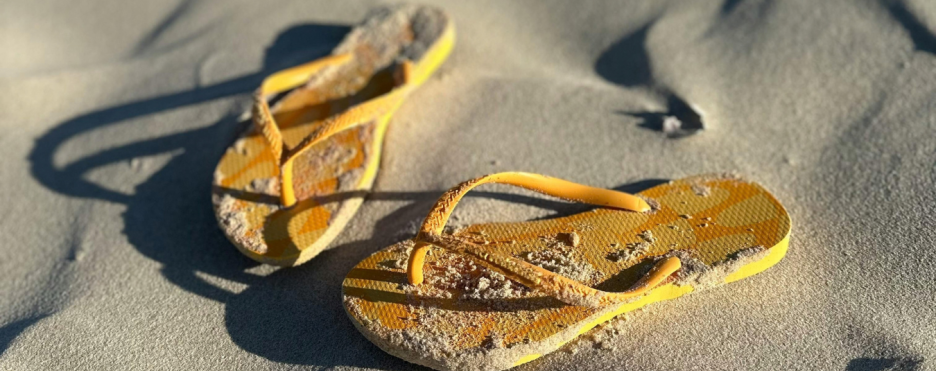
It’s time to bring out the summer shoes again, and maybe you also need some new ones. Something to keep in mind: are your summer shoes supporting your body, or quietly sabotaging it?
Your feet are the foundation of your kinetic chain—the interconnected system of joints, muscles, and nerves that move your body. When something is off at ground level, the effects ripple upward. Ankle instability, knee strain, hip misalignment, and chronic lower back pain can frequently be traced right back to poor foot position and unsupportive footwear.
Choosing the right shoes—and supporting your natural foot mechanics—profoundly affects your posture, gait, and long-term joint health.
The Footwear Dilemma: Barefoot vs. Maximalist Shoes
Before we can even begin to look at which shoes are best for your feet, we need to address the elephant in the room that many podiatrists and other physical therapists are debating when it comes to shoes – and that is barefoot vs maximalist shoes. There is a lot of noise in the health and fitness world right now about footwear, which can make it confusing to know what is actually best for you.
- The Minimalist/Barefoot Argument: Walking barefoot or using minimalist shoes encourages natural foot function and muscle activation. Advocates point out that high-cushion, narrow, or modern "high-tech" shoes act like a rigid cast. Over time, heavy support can weaken and atrophy the foot's intrinsic muscles because the shoe does all the work. So when you wear minimalist shoes or walk barefoot, your feet take strain, and you experience foot pain afterwards.
- But it is important to note that going barefoot or going zero-drop overnight without proper intrinsic foot strength is a fast track to injury (such as plantar fasciitis, Achilles tendinitis, or stress fractures). Most of us have spent decades walking on hard, artificial surfaces in structured shoes, so we also need to strengthen our feet.
- The Maximalist shoe: offers valuable benefits for specific foot types, recovery needs, and clinical conditions.
| · Foot/Injury Profile | Barefoot / Minimalist | Maximalist / High-Cushion |
| Achilles Tendinopathy / Calf Strains | High strain; exercise caution | Highly beneficial (offloads tendons) |
| Metatarsalgia / Ball-of-Foot Pain | High impact on forefoot | Highly beneficial (redistributes pressure) |
| Patellofemoral (Knee) Pain | Can reduce knee loading | Moderate load on knee joints |
| Weak Intrinsic Foot Muscles | Encourages growth/strength | Relieves work; requires supplemental foot exercises |
Having both option types in a shoe rotation—or using maximalist shoes strategically for long days on hard surfaces—allows individuals to enjoy protective cushioning without sacrificing long-term foot mobility and strength.
It’s all about balance and gradual transition. You wouldn't (or shouldn’t) lift a heavy weight without training for it first—the same applies to building strong feet. Finding the right balance requires understanding your personal biomechanics and, where necessary, working with a trusted healthcare provider. You can do both, at the same time – depending on the circumstances and activity. Walking barefoot does help strengthen your feet, and sometimes your more cushioned high-tech shoes are necessary when recovering from injury, on your feet all day, or for performance. If you spend a lot of time in maximalist shoes, it is even more important to focus on foot-strengthening exercises.
What to Look for in a Summer Shoe
A healthy summer shoe should provide support where needed while allowing your feet to move, spread, and build strength naturally. Look for:
- Wide Toe Boxes: Your toes need space to splay naturally as you step. A wide toe box promotes proper balance and weight distribution.
- Ankle & Midfoot Security: Look for sandals with ankle straps or a secure harness across the instep/front of the ankle so your foot doesn't have to strain to keep the shoe attached.
- Contoured Arch Support: A subtle, ergonomic arch structure helps prevent excessive inward collapse (over-pronation) during prolonged standing or walking.
- A Firm Heel Cup & Moulded Footbed: Sandals with a structured heel cup stabilize the rearfoot and keep your natural heel pad centred under your weight.
Summer Shoe "Red Flags": What to Avoid
- Conventional Cheap Flip-Flops: Flat, structureless rubber flip-flops with a single thong strap force your toes to "claw" or grip constantly with every step just to keep the sandal on, overloading the plantar fascia and toe flexor tendons.
- Narrow, Tapered Toe Boxes: Shoes that pinch your toes together lead to bunions, hammertoes, and diminished sensory feedback.
- Pointy High Heels & Stilettos: High heels shift your entire centre of gravity forward, placing excessive pressure on the metatarsal heads (ball of the foot), shortening the calf muscles, and putting immense force through the knees and lumbar spine.
Signs It’s Time to Say Goodbye to Your Summer Shoes
If you experience any of the following, your shoes are likely causing harm—or at least shouldn't be worn for extended periods:
- Repeated Blisters or Hotspots: A sign of friction caused by poor fit, slipping, or pressure points.
- Foot Fatigue & Soreness: If your arches or calves feel exhausted after brief wear, the shoe isn't providing the structural baseline your feet currently need.
- Toe Gripping: If you notice your toes clutching the sole for dear life while walking, the shoe lacks adequate retention straps.
- Asymmetrical or Excessive Tread Wear: Look at the soles of your shoes. Heavily worn outer or inner edges indicate gait compensations and uneven force distribution.
- Over-Pronated Compression: If the heel or midfoot of the shoe is visibly compressed inward, the footwear has lost its structural integrity and is actively encouraging improper collapse.
Holistic Foot Care:
Your feet allow you to stand, balance, move, and experience the world, yet they are often the most neglected part of the body. Investing in your foot health yields long-term rewards—foot pain is debilitating, and knee, hip, or back rehab can be long and costly.
Recommendations on general foot care:
- Regular Foot TLC / Maintenance: Keep your feet moisturized, trim nails neatly straight across, and monitor for calluses, corns, or dry, cracked heels.
- Mobility & Strength Exercises: Incorporate daily / every other day foot-strengthening exercises—like toe splays, short-foot exercises, and calf/fascia stretches—to build resilience. (You can do some exercises waiting in a line)
- Ditch the Problem Pairs: If a pair of shoes consistently causes pain, let them go. No shoe is worth foot pain, ankle injuries, knee pain, hip misalignment or back issues.
- Work with a Multidisciplinary Care Team: Your foot health is a dynamic picture. Understanding who to see makes all the difference:
- Therapeutic Reflexologists: While reflexology focuses primarily on systemic balance via reflex points, reflexologists frequently work with foot fascia release, joint mobilisation, and identifying early structural imbalances. We can also guide you on general foot care and refer you to the right specialist.
- Biokineticists & Physiotherapists: Essential for targeted exercise prescription, gait re-education, and rehabilitating muscular imbalances in the feet, ankles, and legs.
- Chiropractors & Podiatrists: Ideal for structural realignments, joint adjustments, custom orthotics, or managing specialised clinical foot conditions.
Key Takeaway
You don't need to throw away every stylish shoe you own, but having a foundation of supportive, well-fitted footwear—combined with active foot strengthening—will keep you moving comfortably through summer and for years to come.
If you really love the shoes that don’t love you, limit the time you spend standing and walking in them. Wear them for the photos or when you won't be spending much time on your feet. Just perhaps think thrice before you buy another pair of summer shoes – they can be both aesthetic and functional; do your research.
References & Further Reading
- BBC Health: "Are 'barefoot' shoes actually good for your feet?" (BBC Article)
- Kanner, Aleena. The Summer Shoe List, 2026. (www.aleenakanner.com)
- Journal of Science and Medicine in Sport. Plantar pressure in recreational athletes running in maximal and traditional shoes. (https://www.jsams.org/article/S1440-2440(25)00182-3/abstract)