
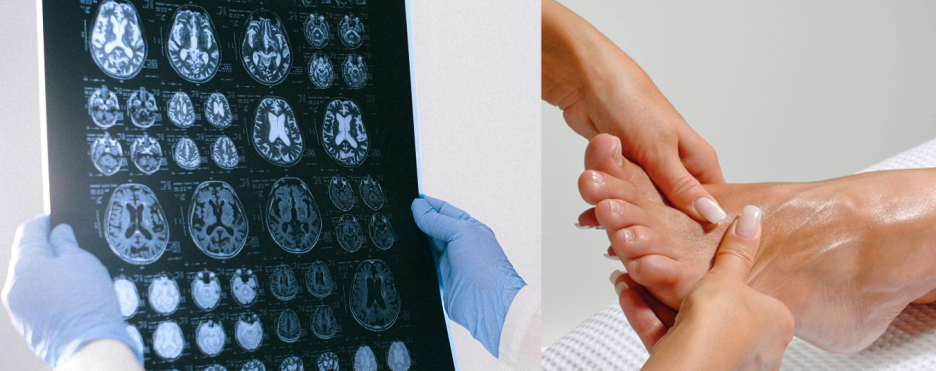
For years, those of us in the clinical reflexology community have faced a familiar hurdle: explaining how therapeutic reflexology works to the broader medical community (and even finding the appropriate wording to explain how reflexology works to our clients).
While decades of clinical practice and patient case studies have clearly demonstrated its effectiveness for specific health conditions, our explanations of the internal mechanisms have remained largely theoretical. We knew shifts were happening—we could see it and our patients could feel it—but we lacked the scientific visual data to back it up.
Groundbreaking functional MRI (fMRI) research was presented right here in Cape Town in May 2026. We now have direct, visual proof of the neurological communication between the feet and the central nervous system.
The imaging showed real-time neurological communication through working on specific reflexes on the feet.
The Study at a Glance
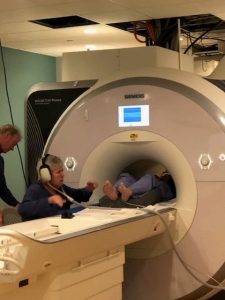
On May 12, 2026, Dr. Stefan Posse, a researcher from the University of New Mexico School of Medicine, presented pioneering findings on the "Neural Pathways of Applied Reflexology" at the International Society for Magnetic Resonance in Medicine (ISMRM) Annual Meeting.
Collaborating with renowned reflexology educators Barbara and Kevin Kunz, as well as researchers from the University of Minnesota, the team used advanced fMRI technology to map brain activity in real-time while reflexology techniques were being applied. The study observed both healthy controls and patients recovering from a stroke.
The results offer three major breakthroughs for therapeutic reflexology:
- Direct Brain Mapping (Specific Reflexes = Specific Networks)
The scans revealed that stimulating specific reflex areas on the foot isn't just a localised physical sensation. It doesn't just trigger the general "foot area" of the brain, either. Instead, different reflex points activated distinctly different corresponding neural networks across multiple brain regions.
- The Body-Awareness Centre Lights Up
One area that consistently responded to the reflex stimuli was the supramarginal gyrus. The supramarginal gyrus is packed with "mirror neurons" and governs empathy, learning, and somatosensory (body) awareness.
When this area lights up, it suggests that reflexology acts as a neurological catalyst, helping patients "re-map" their nervous system and feel deeply reconnected to their physical bodies.
- Real Clinical Validation for Stroke Rehabilitation
In participants who had suffered a stroke, the brain activation patterns looked different—more lateralized (one-sided)—and varied depending on whether the left or right foot was being worked.
Most profoundly, following the reflexology application, stroke patients demonstrated increased two-point discrimination and measurable physical improvements in the sensorimotor function of their hemiplegic (paralyzed) hands.
What This Means for the Future of Holistic Health
If you have ever lain on a treatment table and felt a profound, systemic "shift" during a session, you weren't imagining it. The medical field has often dismiss holistic therapies as mere relaxation or the placebo effect, but science is now being able to help prove otherwise.
Reflexology is a targeted, neurological stimulus. When we work the feet, we are directly communicating with the central nervous system, prompting it to self-regulate, ease pain, and restore homeostasis / balance in the body.
For stroke and neuro-rehabilitation programs, this study provides clinical validation for incorporating reflexology into multi-disciplinary recovery plans to help stimulate neuroplasticity.
The research team is already expanding the study to better understand the precise timing of these brain responses and map out the exact networks involved in stroke recovery. While this is not the first fMRI study done in the field of reflexology, for the first time researchers were able to use Advanced MRI imaging which showed reflexology technique applied, in real time, to different reflexology reflex areas activates different areas and networks of the brain in healthy controls and stroke patients.
Experience the Brain-Body Connection
Whether you are recovering from an injury, managing chronic stress, or actively supporting your long-term neurological health, therapeutic reflexology can help support you.
Sources & Credits:
- Study Title: Neural Pathways of Applied Reflexology
- Lead Researcher: Dr. Stefan Posse, University of New Mexico School of Medicine.
- Presented at: International Society for Magnetic Resonance in Medicine (ISMRM) Annual Meeting, Cape Town, South Africa (May 2026).
- Collaborators: Barbara and Kevin Kunz (Reflexology Research), Arthur Schoen (University of Minnesota).